Go back
Why Melatonin Doesn’t Work for Everyone
Melatonin can help some people fall asleep—but for many, it leads to groggy mornings and restless nights. Here’s why.


Getting tired at night doesn’t always mean your body is ready for sleep.
For years, melatonin has been marketed as the solution to sleep problems. And for some people, it helps—especially short term. But for many others, melatonin stops working, causes groggy mornings, or makes sleep feel unnatural.
So why does this happen?
What melatonin actually does
Melatonin is a hormone your body already produces. Its main job is to signal that it’s time for sleep—not to make you sleep deeper or recover better.
Supplemental melatonin can help shift sleep timing, which is why it’s often useful for jet lag or short-term schedule changes. But it doesn’t directly address muscle relaxation, nervous system calm, or overnight recovery.
That’s where many people start to feel stuck.
Why melatonin can backfire
For some people, supplemental melatonin can cause:
Groggy or “hungover” mornings
Vivid or disruptive dreams
Fragmented sleep later in the night
A feeling of being sedated rather than rested
This often happens because melatonin doesn’t fix the underlying issue—it simply pushes the brain toward sleep, even if the body isn’t ready to fully relax and recover.
Sleep isn’t just about falling asleep
Many people can fall asleep just fine. The real problem is staying asleep deeply enough to recover.
If your nervous system stays activated—due to stress, training, screens, or stimulants—sleep can become light and unrefreshing. You may sleep for hours but still wake up sore, wired, or mentally drained.
Melatonin doesn’t calm the nervous system. It just tells the brain what time it is.
A different approach to sleep support
Instead of forcing sleep, some people do better supporting the systems that allow sleep to happen naturally.
Magnesium plays a role in muscle relaxation, nervous system balance, and sleep quality. When magnesium levels are low, it can be harder for the body to fully unwind at night.
This is why many people turn to melatonin-free sleep support—to help sleep feel calmer and more restorative, without sedation.*
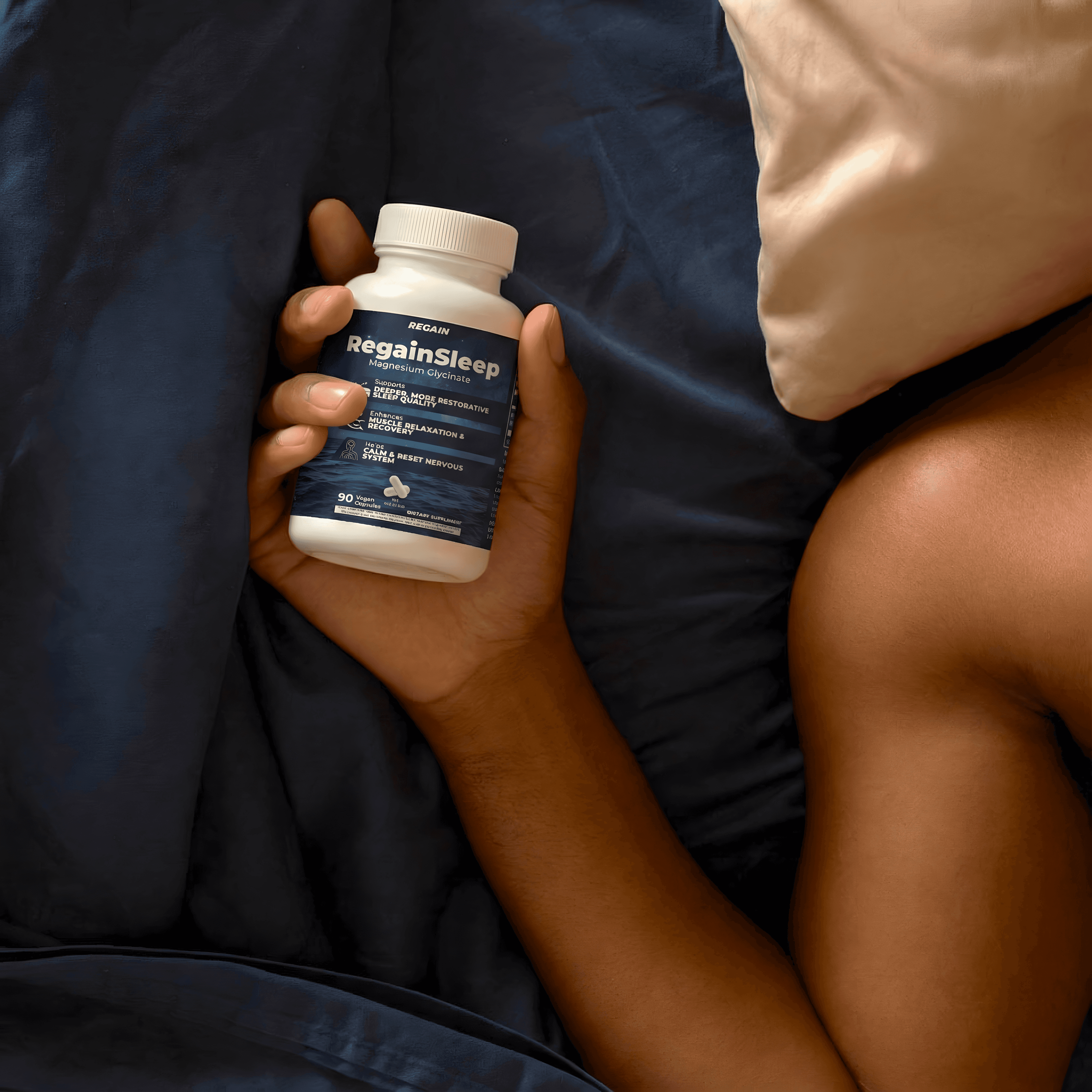
Why RegainSleep is melatonin-free
RegainSleep was intentionally formulated without melatonin.
It uses highly absorbable magnesium glycinate to support relaxation and overnight recovery, rather than forcing drowsiness. The goal isn’t to knock you out—it’s to help your body get more out of the sleep you’re already getting.*
For people who feel worse on melatonin, this approach often feels more natural. Melatonin isn’t “bad.” It just isn’t right for everyone.
If sleep feels forced, fragmented, or groggy the next day, the issue may not be falling asleep—it may be how well your body is supported while you sleep.
Sometimes, less sedation leads to better rest.
*These statements have not been evaluated by the Food and Drug Administration. This product is not intended to diagnose, treat, cure, or prevent any disease.